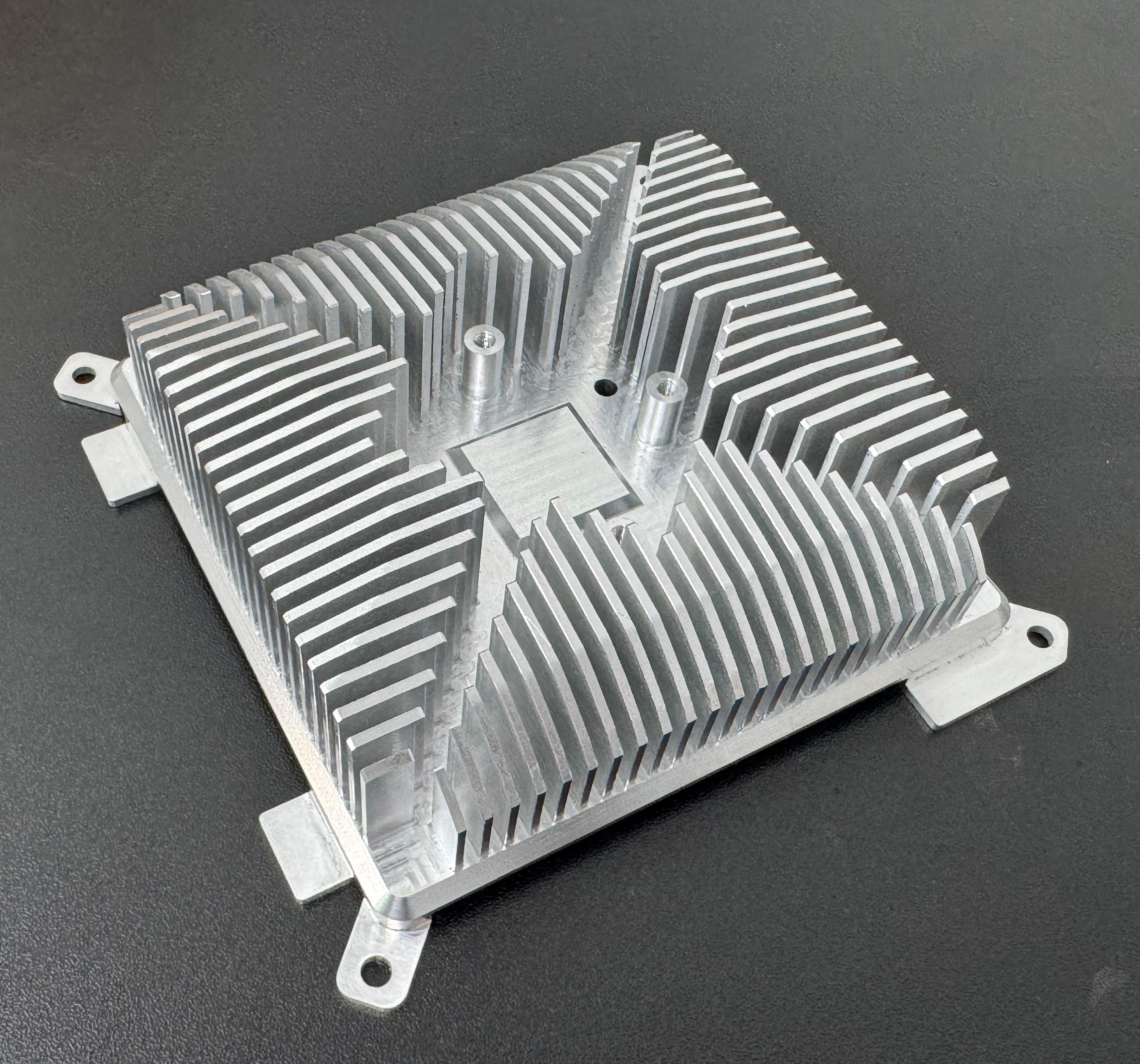
The die casting process utilizes die molds that are injected with high-pressure liquid metal to create parts, components and custom products. The ability to produce a large number of products at a very low cost per unit is one of the biggest draws of custom die casting.
GENOVIS Metals provides premium quality custom die casting services for your part, component and product needs. The die casting process also allows for the creation of parts with complex shapes and unique tolerances. Our custom die cast products can be created with very short leads, which allows for quicker customer turnaround times.
For high-volume production runs, die-casting is an effective manufacturing process. GENOVIS use die casting to manufacture top-quality parts for a wide range of industries.
Some examples of the die cast parts we make include:
GENOVIS utilizes two different types of machines to produce high-quality custom die casts.
Hot chamber machines are specifically used for alloys with low melting temperatures, such as zinc.
Conversely, cold chamber machines are used for alloys with high melting temperatures, such as aluminum and brass.
However, in both machines, after the molten metal is injected into the dies, it rapidly cools and solidifies into the final part called the casting.
Die-casting typically makes use of non-ferrous alloys which offer numerous benefits. The three most common alloys that GENOVIS utilizes within its die casting methods include:
Aluminum, Brass, Zinc
Parts, components, and products that are manufactured through the die casting process do not require additional finishing services. However, if you desire a finished surface to your die casted part or component, we offer the following types of finishing services:
Zinc castings can be easily plated or finished with a minimum amount of surface preparation. Other metals may require additional surface preparation, since cast die-cast products are smoother than most other forms of castings.
At GENOVIS, our custom die casting processes provide numerous benefits over other types of metal working methods. Our die casting services produce parts that are durable, stable and provide high-quality functionality. Some of the other advantages associated with die casting, include:
Why choose Vacuum Casting?
Vacuum Casting is a copying technique used for the production of small series of functional plastic parts. Using two-component polyurethanes and silicone molds.
Vacuum Casting is known for its fast production of high-quality prototypes or end-use products.
Silicone molding results in high-quality parts comparable to injection-molded components. This makes vacuum casted models especially suitable for fit and function testing, marketing purposes or a series of final parts in limited quantities.
Advantage of Vacuum Casting
· Standard accuracy: ±0.2mm (with a lower limit on ± 0.2 mm on dimensions smaller than 100 mm)
· Surface quality: It provides excellent surface finishes, so there is no need for post-processing. or
· Minimum wall thickness: To ensure that the mold is filled properly, a wall thickness of at least 0.75 mm is necessary. For best results, we recommend a wall thickness of at least 1.5 mm
· Standard lead time: 15-20 days. This process is ideal for rapid prototyping and design validation.
· Materials: flexible rubbers, rigid plastics, and transparent materials.
· Maximum part dimensions: The size of the mold is limited by the dimensions of the vacuum chamber (1900 x 900 x 750 mm) and by the volume of the product (maximum volume: 10 liters)
· Complex shapes: The process can make copies of complex designs, including ones with undercuts and thin walls.
· Typical quantities: 10-100pcs